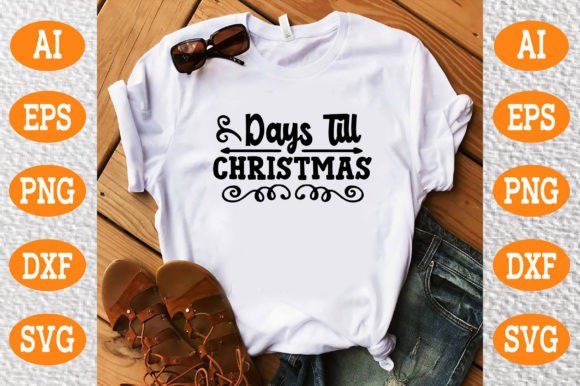
Days Till Christmas SVG: A Designer's Real-World Review
As someone who spends more time hooped up at the machine than I do sleeping during the holiday rush, I approach every new Days Till Christmas Svg file with a mix of excitement and skepticism. We have all been there: you download a cute graphic, load it into your software, and realize too late that the lines are too close together for a clean satin stitch or the text is so small it will vanish into the fabric texture. When evaluating this specific design for real project use, my goal isn't just to see if it looks good on a screen, but to determine if it can withstand the rigors of actual stitching and deliver a professional finished product for a client or customer.
The first impression of this machine embroidery design is one of playful anticipation. The layout typically features bold, legible typography paired with festive iconography, creating a mood that is urgent yet cheerful. For an Etsy seller or craft business owner, this visual personality is gold. It speaks directly to the "countdown" mentality that takes over in December. However, from a technical standpoint, the transition from a vector Graphics file to a stitched reality requires careful planning. Since the source material is described as cut files for Cricut and Silhouette, imported as SVGs, we are often looking at shapes that need to be manually converted or carefully assigned stitch types in our embroidery software. This isn't a pre-digitized embroidery file ready to run; it is a raw asset that demands a designer's touch to become a viable applique design or filled motif.
Putting the Design to the Test: The Holiday Sweatshirt Scenario
To truly gauge the value of the Days Till Christmas Svg, I imagined a specific real-life scenario: a custom order for a family set of matching holiday sweatshirts. This is a staple request for any apparel decorator in November and December. The client wants something fun but not childish, suitable for photos and wearing to holiday parties. I visualized placing the design centrally on a heather grey fleece sweatshirt. The challenge here is the fabric texture. Fleece has a nap, and if the stitch density of your digitization is too low, the grey fluff will peek through the white thread, ruining the crispness of the countdown numbers.
In this context, the shape and theme of the design work beautifully. The concept of counting down creates an interactive element for the wearer. Imagine a parent updating the number daily or weekly. If you are using this as a base for a personalized gift, you might choose to embroider just the frame and the words "Days Till," leaving the number blank for the customer to fill in with iron-on vinyl or by hand. This hybrid approach leverages the strength of the SVG format while acknowledging the limitations of static embroidery. For a small shop product, offering this as a "DIY Countdown Kit" could be a unique selling point that separates your brand from competitors selling generic pre-made shirts.
Navigating Fabric Challenges and Stitch Types
While the design shines on stable fabrics like cotton twill or denim, caution is required when moving to stretchy or textured materials. If you plan to use this for baby embroidery on a soft onesie, you must account for the growth and movement of the garment. A dense fill stitch might make the fabric too stiff and uncomfortable against sensitive skin. In such cases, converting the solid shapes of the SVG into a lighter running stitch outline or a sparse sketch fill can maintain the visual appeal without compromising comfort. Similarly, for tote bag design projects, where durability is key, you would want to increase the density and perhaps add a border to prevent fraying after repeated use.
One critical area to watch is the lettering. In many countdown designs, the numbers are the focal point. If the Days Till Christmas Svg includes intricate serifs or very thin lines, these can be problematic for smaller hoop sizes or lower-end machines. Before committing to a production run, I always recommend testing the design on scrap fabric identical to your final material. Check the thread contrast; a red design on a green shirt might look festive in theory but can vibrate visually if the shades are too similar. Testing in black and white mockups first helps verify that the silhouette holds up even without color reliance.
Commercial Viability and Brand Consistency
For commercial embroidery projects, consistency is everything. If you are selling these as part of a boutique collection, the Days Till Christmas Svg needs to align with your broader aesthetic. Does it fit your brand voice? Is it too novelty-focused, or does it have a modern edge? The versatility of this graphic allows it to be adapted for various products beyond apparel. Think about embroidered patch creation. By adding a merrowed edge border in your digitizing software, this design could become a collectible patch for jackets or backpacks, extending its lifecycle well past the holiday season.
Furthermore, the presentation of the handmade product relies heavily on how the design is executed. Poor stitching clarity can erode customer trust. If the corners of the letters are bulky or the curves are faceted, it signals a lack of professionalism. Taking the time to refine the pathing and pull compensation in your software ensures that the final result looks like it came from a high-end manufacturer, even if it was made in a home studio. This attention to detail justifies a higher price point and encourages repeat buyers.
Essential Pre-Production Checklist
Before you hoop up and start stitching for profit, there are several practical steps every designer should take when working with SVG cut files intended for embroidery:
- Verify Licensing: Always confirm whether the license allows for commercial use of the finished physical items. Some creators allow personal use only, which restricts your ability to sell the embroidered goods.
- Check File Compatibility: Ensure your embroidery software can import the SVG cleanly. Sometimes complex paths need simplification to avoid errors during the digitizing process.
- Select the Right Stabilizer: For stretchy fabrics like t-shirts or sweatshirts, a cut-away stabilizer is often superior to tear-away to prevent distortion over time.
- Test Thread Colors: Match your digital color palette to actual thread charts (like Madeira or Isacord) to avoid unpleasant surprises when the machine starts running.
- Evaluate Hoop Limits: Confirm that the design fits within your available hoop sizes, especially if you are working with smaller items like caps or baby socks.
Ultimately, the Days Till Christmas Svg is a versatile asset that, when handled with technical skill and creative foresight, can elevate your holiday offerings. It bridges the gap between digital convenience and tactile craftsmanship. Whether you are creating a single personalized gift for a neighbor or stocking inventory for a busy craft fair, the success of the project lies in the preparation. By respecting the nuances of fabric, thread, and stitch structure, you transform a simple digital download into a cherished keepsake that captures the magic of the season.